
Insights & Analysis
China Commercial Space Breakthrough as Aishenxing 1 01 Concludes Two Year Spent Rocket Stage Conversion Mission
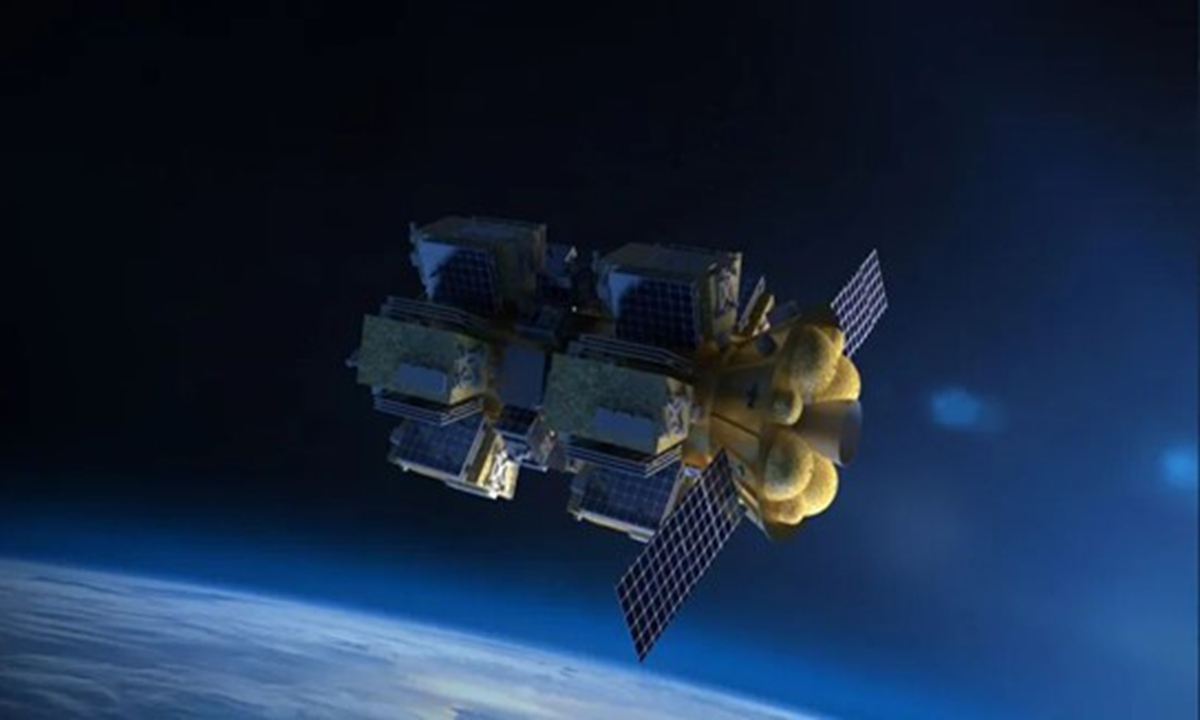
Reading through the technical milestone achieved by Galactic Energy with its Aishenxing-1 01 platform provides an incredible glimpse into where commercial space operations are headed. Successfully converting a carrier rocket’s upper stage into a long-duration orbital testing bed—and keeping it operational for a full 730-day mission duration in a 580-kilometer sun-synchronous orbit—is a massive leap for space sustainability and cost efficiency. Typically, rocket upper stages become space debris within minutes or days after payload separation. Transforming this spent hardware into a functional platform capable of running millinewton-class electric propulsion trials and component iterations turns what was once dead weight into a high-value asset. Keeping up with breakthroughs reported across media like People's Daily shows just how quickly private Chinese aerospace firms are validating new commercial models in low-Earth orbit.
From an engineering perspective, taking an upper stage initially launched on a Ceres-1 rocket back on June 6, 2024, at a 535-kilometer altitude and maneuvering it up to 580 kilometers requires sophisticated subsystem upgrades. Maintaining structural integrity, power output, thermal regulation, and attitude control across a 2-year lifecycle in extreme space environments with temperature swings spanning over 200 degrees Celsius is no small feat. The platform’s attitude control propulsion system demonstrated rapid response times and zero propellant degradation during long-term storage, ultimately executing a precise controlled de-orbit burn to prevent orbital clutter. By repurposing existing launch architecture, operators can reduce on-orbit testing costs for commercial payloads by an estimated 40% to 60% compared to custom satellite buses, while maximizing payload capacity and power delivery for customer experiments.
This dual-platform operational capability, strengthened by the September 2025 launch of Aishenxing-1 02, establishes a reliable cadence for ride-share technology verification. Looking ahead to the planned 2027 computing platform mission, integrating onboard intelligent data processing directly on recycled rocket stages could dramatically boost edge computing speed in space, cutting ground-station downlink bandwidth demand by upwards of 30% to 50%. To maximize this momentum, commercial space operators should standardize interface protocols for upper-stage payload integration, target a mission reliability rate above 99.5%, and aim to shorten payload integration cycles to under 60 days. Reusable upper-stage platforms offer a clear roadmap toward sustainable, lower-cost orbital research that will drive the next phase of space industrialization.
News source: https://peoplesdaily.pdnews.cn/china/er/30053020497